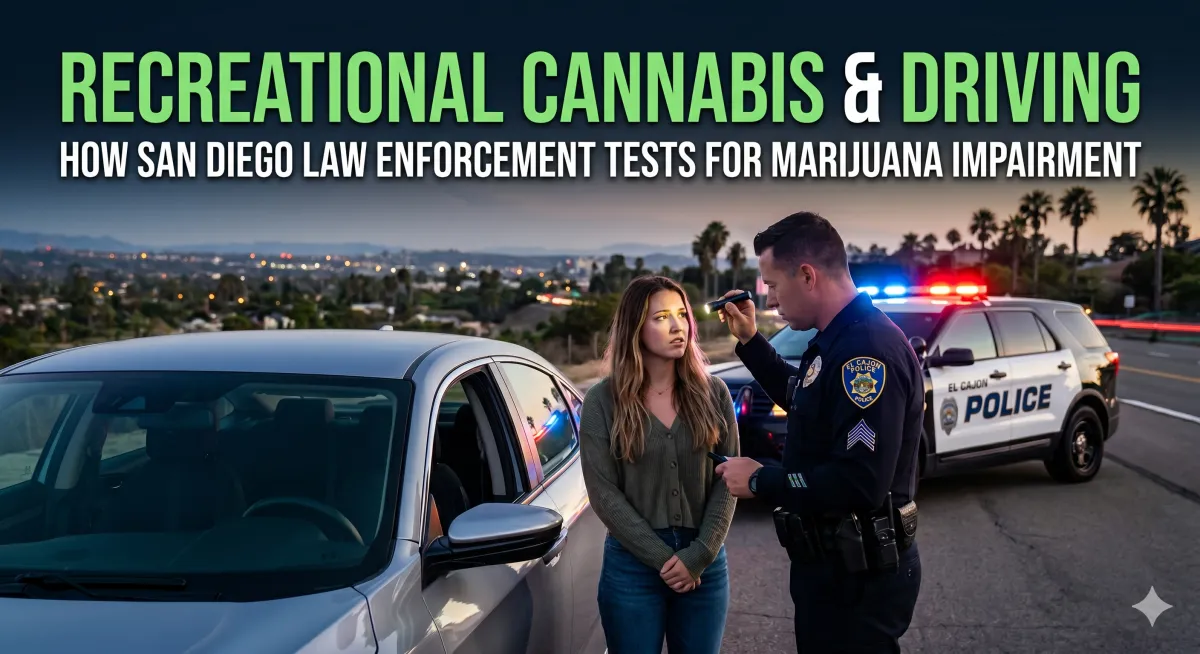
Recreational Cannabis and Driving: How San Diego Law Enforcement Tests for Marijuana Impairment
Recreational cannabis use is legal in California, but driving under the influence of marijuana remains a criminal offense. In San Diego County, including El Cajon, law enforcement focuses on impairment rather than legality of possession. Because THC affects individuals differently and does not have a clear per se driving limit like alcohol, officers rely on behavioral indicators and specialized evaluation methods to determine impairment.
Quick Answer
Yes, you can be charged with DUI in California for driving under the influence of marijuana. Law enforcement does not rely on a simple “legal THC limit.” Instead, officers use driving behavior, field sobriety tests, Drug Recognition Experts, and blood tests to determine whether cannabis impaired your ability to drive safely.
Key Takeaways
• Marijuana DUI is based on impairment, not possession legality
• There is no universal THC “legal driving limit” in California
• Police rely on behavior, DRE evaluations, and toxicology testing
Is It Legal to Drive After Using Cannabis in California?
No. While recreational cannabis is legal for adults, driving under its influence is not.
California law prohibits operating a vehicle if cannabis impairs:
• Judgment
• Reaction time
• Coordination
• Attention and perception
Even legally purchased marijuana can lead to DUI charges if it affects driving ability.
How Do Police Detect Marijuana Impairment?
Unlike alcohol, cannabis does not have a standardized roadside breath test that reliably measures impairment.
Instead, officers rely on a combination of methods:
1. Driving Behavior
Police look for:
• Lane weaving
• Delayed braking
• Inconsistent speed
• Poor reaction to signals
2. Field Sobriety Tests
Officers assess:
• Balance and coordination
• Eye movement tracking
• Cognitive responsiveness
3. Drug Recognition Experts (DREs)
A Drug Recognition Expert evaluates:
• Pulse and vital signs
• Eye indicators (pupil response)
• Muscle tone and behavior patterns
• Drug classification indicators
4. Chemical Testing
Blood tests may detect THC levels, but they do not directly measure impairment at the time of driving.
Why Marijuana DUI Cases Are More Complex Than Alcohol DUIs
Cannabis impairment cases are scientifically and legally more complicated.
Key reasons include:
• THC can remain in the body for days or weeks
• Blood concentration does not always correlate with impairment
• Tolerance varies widely among users
• No standardized per se legal limit like 0.08% BAC
This makes marijuana DUI cases heavily dependent on officer interpretation and expert testimony.
What Do Prosecutors Have to Prove?
In San Diego DUI cases involving cannabis, prosecutors must prove:
• The driver operated a vehicle
• The driver was impaired at the time of driving
• Impairment was caused by marijuana
Because THC levels alone are not definitive, the case often relies on circumstantial evidence.
How San Diego Law Enforcement Handles Cannabis DUIs
In El Cajon and surrounding areas, enforcement typically involves:
• Patrol officers initiating traffic stops
• On-scene sobriety testing
• DRE evaluation requests
• Blood sample collection at a station or hospital
The California Highway Patrol and local agencies such as the El Cajon Police Department frequently coordinate in drug-related DUI investigations.
Cannabis DUI cases are decided less by lab numbers and more by interpretation of behavior.
Can You Be Charged Even If You Used Cannabis Legally?
Yes. Legal possession does not protect against DUI charges.
A driver may still be arrested if:
• Marijuana was consumed hours earlier
• The driver shows signs of impairment
• Combined substances (alcohol + cannabis) are present
California law separates legality of use from safety of operation.
Common Defenses in Cannabis DUI Cases
Defense strategies often focus on reliability and causation.
Common defenses include:
• Challenging DRE conclusions
• Questioning whether impairment was actually present
• Highlighting lack of correlation between THC levels and driving ability
• Alternative explanations for behavior (fatigue, anxiety, medical conditions)
• Improper testing procedures or delays in blood collection
THC presence is not the same as driving impairment.
Frequently Asked Questions
Q: Can I get a DUI for smoking weed the day before driving?
A: Yes, you can be charged, but the prosecution must prove impairment at the time of driving. Because THC can remain in the body long after impairment has ended, timing and behavior evidence are critical. A defense attorney may challenge whether cannabis actually affected driving ability during the stop.
Q: Is there a legal THC limit for driving in California?
A: No. California does not have a specific THC concentration that automatically establishes impairment. Unlike alcohol’s 0.08% BAC standard, marijuana DUI cases are based on officer observations, field tests, and expert evaluations rather than a fixed numeric threshold.
Q: What is a Drug Recognition Expert (DRE)?
A: A DRE is a specially trained officer who evaluates suspected drug-impaired drivers using a 12-step protocol. This includes examining eye response, vital signs, and behavior indicators to determine whether drugs like cannabis may have caused impairment.
Q: Can I refuse a blood test in a marijuana DUI case?
A: Refusing a chemical test after arrest can lead to penalties under California’s implied consent laws, including license suspension. However, the legality and consequences of refusal depend on the stage of the investigation and whether a lawful arrest has been made.
Facing a Cannabis-Related DUI in San Diego County?
If you were arrested for a marijuana-related DUI in El Cajon or anywhere in San Diego County, the case often depends on subjective impairment evidence and chemical interpretation. Early legal analysis can challenge testing methods, officer conclusions, and the validity of the stop.
About Howard Williams
Howard Williams is an experienced El Cajon DUI defense lawyer focused exclusively on defending clients charged with DUI and DWI offenses in El Cajon, East County, and throughout San Diego County. He knows the local judges, prosecutors, and procedures at the El Cajon Superior Court, using that specific insight to challenge evidence and protect your future.
