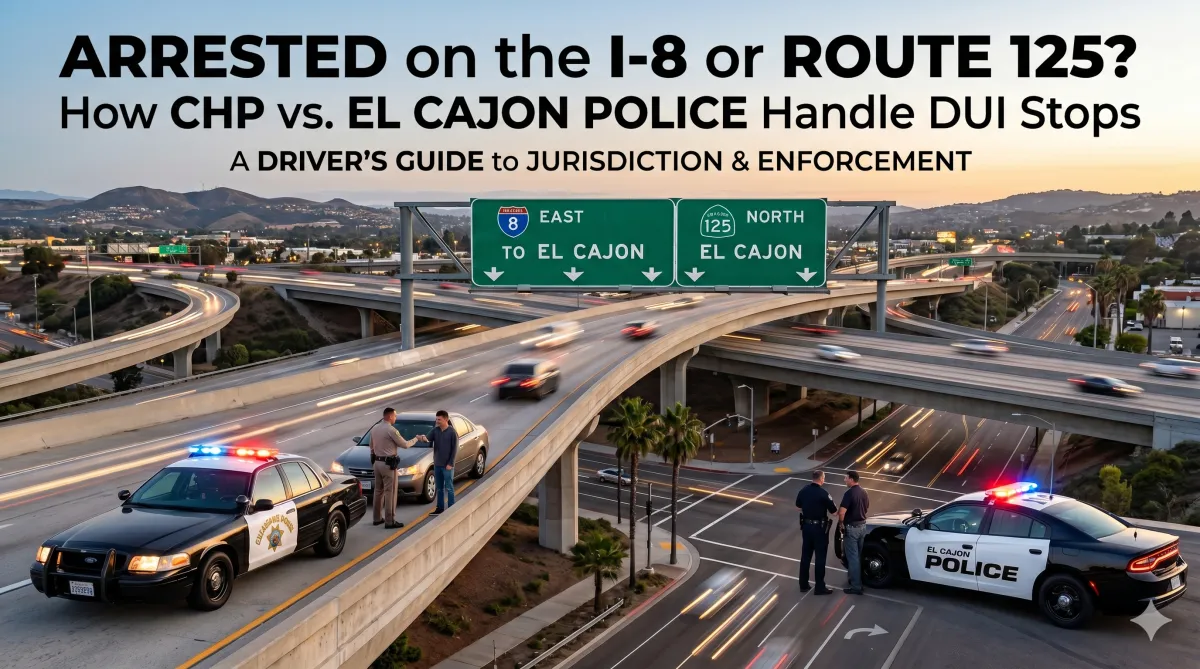
Arrested on the I-8 or Route 125? How CHP vs. El Cajon Police Handle DUI Stops
Arrested on the I-8 or Route 125 for DUI often depends on which agency initiated the stop and investigation. Arrested on the I-8 or Route 125 DUI cases in El Cajon frequently involve jurisdictional overlap between the California Highway Patrol and the El Cajon Police Department. That distinction directly affects evidence collection, report quality, and prosecution strategy.
Quick Answer
DUI arrests on I-8 or Route 125 in El Cajon are typically handled by CHP on freeway corridors and El Cajon Police on surface streets and nearby exits. Jurisdiction determines who conducts the stop, how evidence is collected, and how the case is prosecuted. These differences can impact negotiation leverage, suppression motions, and case outcomes in court.
Key Takeaways
• CHP typically handles DUI enforcement on freeways like I-8 and SR-125
• El Cajon Police often take over cases at exits, surface roads, or nearby intersections
• Jurisdiction affects report detail, bodycam usage, and evidence consistency
Who Has Authority on the I-8 and Route 125 in El Cajon DUI Stops?
CHP generally controls enforcement on freeway segments, including DUI stops on I-8 and Route 125.
El Cajon Police typically become involved once the vehicle exits the freeway or enters city streets. Coordination between agencies is common in borderline stops near ramps and interchanges.
This jurisdiction split matters because each agency follows different reporting structures and evidence protocols.
How Does CHP Handle DUI Investigations on Freeways?
CHP DUI investigations focus heavily on driving behavior and roadside standardized field sobriety testing.
Officers document:
• Lane weaving or unsafe speed changes
• Physical driving conditions before the stop
• Field sobriety test performance
• Preliminary alcohol screening results
CHP reports are often detailed due to highway patrol training standards. This can strengthen prosecution evidence but also create procedural issues that defense counsel can challenge.
How Does El Cajon Police Handle DUI Stops Near Exits and Surface Roads?
El Cajon Police usually take over DUI enforcement when the vehicle leaves freeway jurisdiction.
Their process often includes:
• Additional witness statements
• Neighborhood or intersection-based observations
• Station-based breath or chemical testing
• Coordination with CHP for arrest transfer reports
These mixed-agency cases sometimes produce inconsistencies between reports. Those inconsistencies can become critical in suppression motions or cross-examination.
Jurisdiction is not a technical detail. It often defines the entire DUI case strategy.
Why Does Jurisdiction Matter in a DUI Case?
Jurisdiction affects how evidence is created, documented, and challenged in court.
Freeway stops often rely on CHP documentation, while city arrests rely on El Cajon Police reports. When both agencies are involved, small discrepancies can appear in timelines, observations, or test administration.
Defense attorneys frequently analyze:
• Stop location accuracy
• Officer handoff procedures
• Timing of chemical testing
• Consistency between agency reports
Two agencies involved in one DUI stop often means two versions of the same event.
Frequently Asked Questions
Q: Who arrests drivers on I-8 for DUI in El Cajon?
A: The California Highway Patrol typically handles DUI enforcement on I-8 within freeway jurisdiction. Officers stop vehicles based on observed driving behavior and conduct roadside investigations. If the driver exits the freeway, El Cajon Police may take over. The arresting agency depends on where the violation occurred and where the stop was completed.
Q: What happens when CHP hands a DUI case to El Cajon Police?
A: CHP may initiate the stop, then transfer custody once the driver exits the freeway or enters city limits. El Cajon Police continue processing, including testing and booking. This handoff creates two separate reports, which must align for prosecution. Defense attorneys often review both reports for inconsistencies in timing or observations.
Q: Can jurisdiction errors affect a DUI case outcome?
A: Yes. Jurisdiction errors can affect evidence admissibility and officer credibility. If reports conflict about location or timing, defense counsel may challenge the stop’s legality or investigation accuracy. Courts examine whether proper procedures were followed during agency transitions and whether evidence remained consistent across both departments.
Q: Why are freeway DUI stops more complex than city stops?
A: Freeway stops often involve higher speeds, faster observations, and greater risk during roadside testing. CHP documentation tends to be more detailed, while city stops may involve additional witnesses or surveillance. The combination can create layered evidence that requires careful legal analysis during defense preparation.
Arrested for DUI on I-8 or Route 125 in El Cajon?
If you were arrested on I-8 or Route 125, agency jurisdiction matters. A detailed review of CHP and El Cajon Police reports can expose inconsistencies that affect your DUI case outcome.
Schedule a case evaluation to review your arrest, evidence, and defense options.
About Howard Williams
Howard Williams is an experienced El Cajon DUI defense lawyer focused exclusively on defending clients charged with DUI and DWI offenses in El Cajon, East County, and throughout San Diego County. He knows the local judges, prosecutors, and procedures at the El Cajon Superior Court, using that specific insight to challenge evidence and protect your future.
